Navigating Without a Map: Why Accurate Books Matter
What an Army land navigation course taught me about bookkeeping, and why running your business without accurate books is like walking the woods without a map.
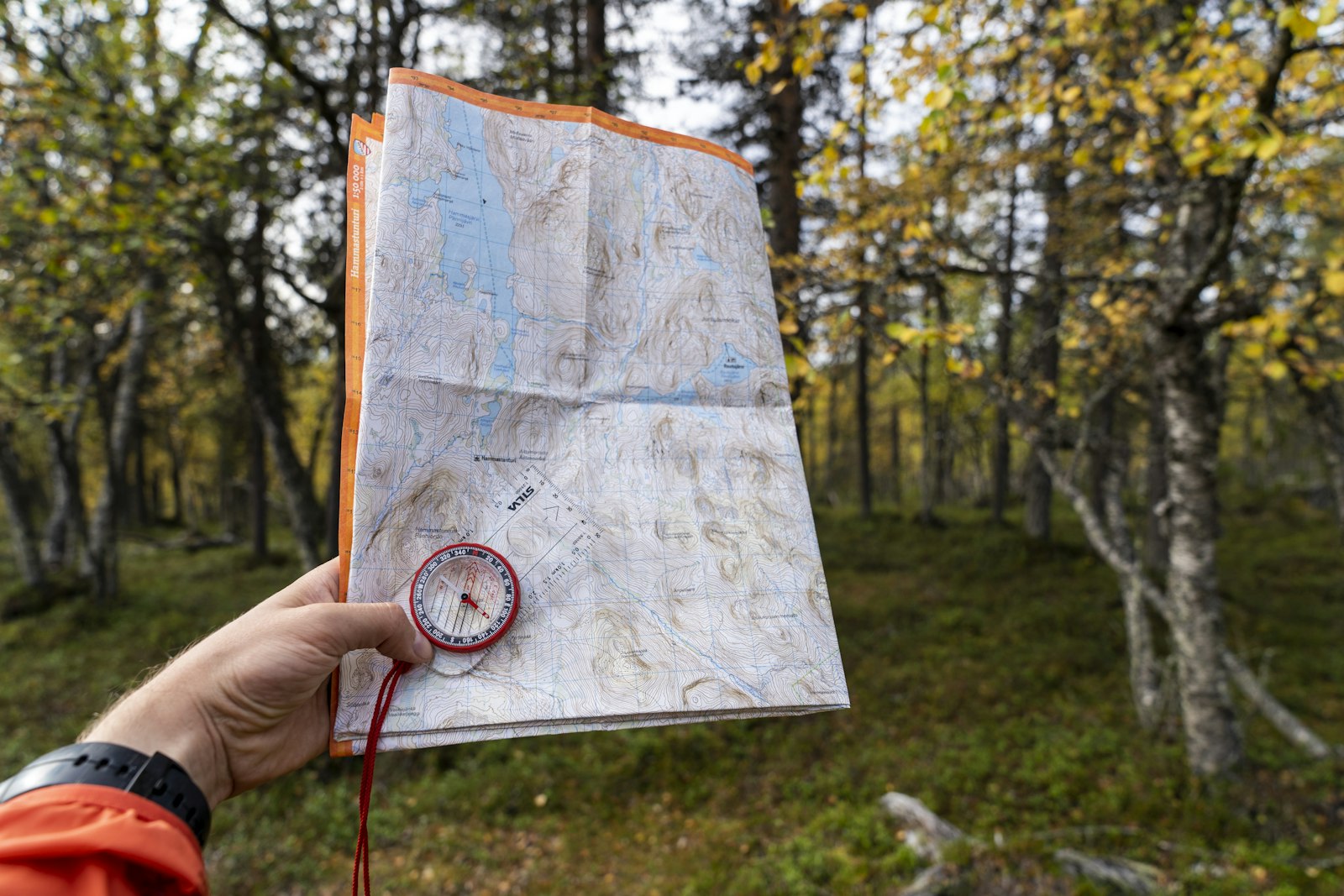
Years ago, when I was a young, green 2nd Lieutenant in the US Army, I found myself in a difficult situation to navigate. Literally. I was one of the last classes to go through Armor School and the Army Reconnaissance Course at Fort Knox, Kentucky, before both moved to Georgia. About halfway through the Reconnaissance Course, I found myself somewhat lost, and without a map. This was on purpose, though. I was on the last leg of the culminating exercise known as the Star Course: a five-leg, point-to-point land navigation course through the sprawling thickets of the Wendell H. Ford Regional Training Center in western Kentucky.
That day taught me a lesson I didn't fully appreciate until years later, when I was running a business of my own.
The Star Course
The day was an interesting one from start to finish. To begin, the gaggle of 2nd Lieutenants with me (Butter Bars, in Army slang, after our gold rank insignia) were blindfolded, driven around in circles, and dropped off in the middle of nowhere. Truly. Before we could go anywhere, we had to figure out where we were.
Once we self-located, we made our way to the first checkpoint, where we were given the coordinates to the second. Easy enough. On to the third.
Here is where it got a bit more interesting. At the third checkpoint, the cadre (the instructors running the course) took our compasses away. Well, at least we still had our maps. By now the other Butter Bars had dispersed, and I was alone navigating to the fourth point. It was testing, but we had adequate training, and navigating by contour lines and roads alone wasn't impossible. I made it to the fourth checkpoint.
The last leg was going to be the most difficult. The cadre gave each of us ten minutes to sketch a map on a piece of paper. Cue the most frantic ten minutes of amateur drawing the Army has ever seen: every notable feature, crossroads, hill, valley, heck, anything that might help on the next leg. When the ten minutes were up, the real map was taken, and off I went into the forest toward the fifth checkpoint with nothing but a hand-drawn sketch and my wits.
The Last Leg
The terrain was tough, but the real challenge was that the whole leg became a process of trial and error. My map was good, but it wasn't perfect. I wandered at times trying to find my bearings, and I doubled back a lot. There was plenty of self-doubt, too. More than once I talked myself into believing I was truly lost.
Every time I lost confidence in where I was, the answer was the same: go back to the last point I knew for certain and try again. It worked, but it was slow, and every wrong turn cost me twice: once to walk it, and again to walk it back.
About twelve hours after being dropped off blindfolded, I walked into that last checkpoint and completed the Star Course. It felt amazing, a huge sense of accomplishment. And a warm shower wasn't far away.
Your Books Are Your Map and Compass
Accounting, and its cousin bookkeeping, remind me of that day. Financial tracking and accurate books are the map and compass of the business world. Without them you, much like I was, are lost.
And the Star Course lines up with running a business more closely than you might think:
- Self-locating comes first. Before you can plan where you're going, you have to know exactly where you stand today. In business, that means books that are current and correct.
- Losing the compass is losing real-time numbers: no clear read on cash, margins, or which way things are trending.
- Losing the map is falling months behind on your books, so you can't see the terrain you've already covered.
- The hand-drawn map is where a lot of owners are right now: running the business off the bank balance, memory, and gut feel. You can make progress that way, but it's slow, it's stressful, and one wrong turn can cost you.
- Going back to the last known point is what catching up on your books feels like. When the numbers drift, you have to return to the last month you know was right and rebuild everything forward from there. It's the same trip, taken twice.
I've Been There
Here's the real problem: bookkeeping is easy to put off.
A couple of years ago, I co-founded a distillery in Colorado Springs. Cue years of chaos. Sales calls, hiring cycles, customer complaints, regulatory reporting, new product development, social media content, tastings at festivals. I even managed to get some sleep a couple of nights. Surviving the day was an exercise in crisis management, and always at the bottom of the to-do list was categorizing expenses and logging transactions. I truly understand the competing priorities business owners face, and how easy it is to fall behind on the basic admin that keeps your books accurate.
It's a slippery slope, though. Every month I put off reconciling bank statements, compiling sales by product, or putting real systems in place, getting caught up got harder. So another month went by without the books getting done. And then another. At our worst, we were three months behind, and I couldn't answer the most basic question of all: how much money (if any) did we make last month?
Getting caught up took me a full weekend. If I had stayed on top of it, it would have been a couple of hours a month. That's the last leg of the Star Course all over again: every month I skipped meant walking the same ground twice.
And the weekend wasn't the worst part. Once the numbers were finally clean, our costs were higher than I thought, and they weren't where I expected them to be. That threw off our target profit margin, which led straight to a cash crunch. We had to put more of our own money into the business to cover it.
That's when I stopped trying to do it all myself. I got help and built processes I could actually sustain:
- I brought in an accountant instead of treating the books as a side project.
- I moved inventory into a digital system so product costs were tracked as they happened, not reconstructed later.
- I made sure every expense landed in the books, including tracking down every credit card statement each month, not just my own.
- I set a hard date every month to close the books. No exceptions.
Once those pieces were in place, I had my map and compass back.
Signs You're Navigating on a Hand-Drawn Map
If a few of these sound familiar, you're not alone, and it's fixable:
- Your books are more than a month behind.
- Tax season is a scramble every year.
- You check the bank balance to decide whether you can afford something.
- You can't say which jobs or services are your most profitable.
- Cash crunches catch you by surprise.
- A lender, bonding company, or insurer asks for financials and it takes weeks to pull them together.
- You (or your spouse) are doing the books late at night or on weekends.
What "On Course" Looks Like
Good books don't have to be complicated. For most small businesses, being on course means:
- Every account reconciled monthly. Bank accounts and credit cards match what's in your books.
- A hard monthly close date. Last month's books are finished by the middle of this month, not at tax time.
- Costs tied to jobs. Labor and materials are assigned where they belong, so you can see what each one actually earns.
- A 15-minute monthly check-in. You look at your profit and loss statement and your cash, and ask what changed and why.
Finding Your Way
I made it to that last checkpoint because the Army had trained me to self-locate and keep navigating when the tools were taken away. Most business owners never got that training. They're experts at the work their customers pay for, and the back office gets whatever time is left over.
Running a small business is really hard. I know, because I've done it, and that's a big part of why I started KJK Group. We take the back office off your plate and hand you back an accurate map and a working compass, so you know exactly where your business stands and where it's headed.
If you're navigating on a hand-drawn map right now, let's talk. We'll help you figure out where you are first, then chart the way forward.